The same board
There has never been just one game of chess. As of today, three of them can play each other.
Published September 22, 2026
Chess is a family of games: boards, pieces, rules and names carried across regions, languages and centuries. Some have a river. Some keep their king inside a palace and call him a General. Some let captured pieces return to the board. Some make the Queen the strongest piece; some never had a Queen at all.
They are not imperfect versions of a single original. They are games in their own right, with their own histories, habits and ideas of what makes a position interesting.
Sanki brings three of them to one table. Chess, as the West plays it. Ōgi, a Japanese-style game of drops. Xiongqi, a Chinese-style game of river and General. Each is played on an 8×8 board; each remains itself when it meets the others.
Nine pairings
Any of the three can face itself or either of the others — nine pairings, each side under its own rules. Some of these encounters no tradition has had to resolve before. A captured Queen may return as a foot soldier. A General at the far end of the board may forbid a castling. A Soldier may capture a Fu sideways, en passant.
竹影 xiongqi
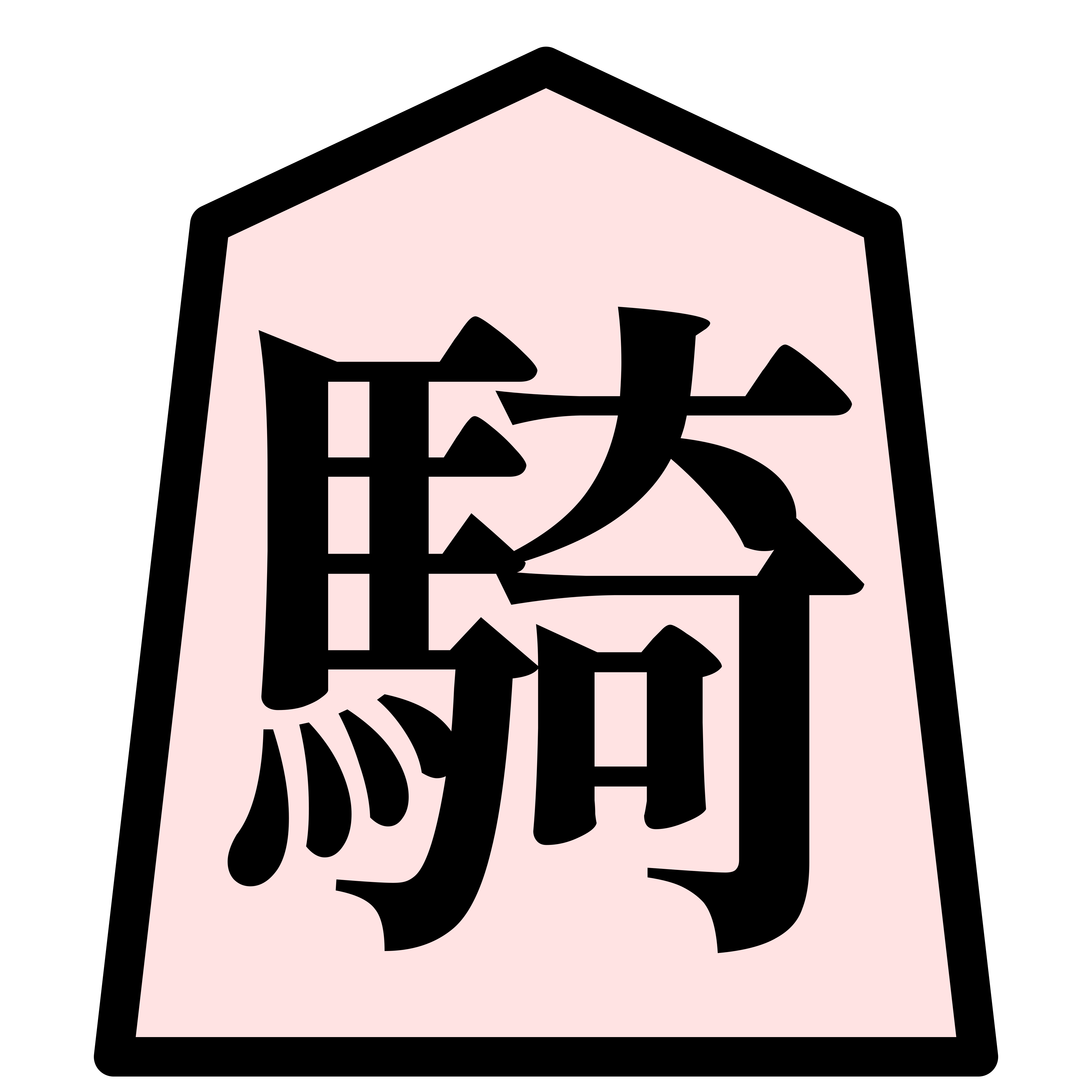
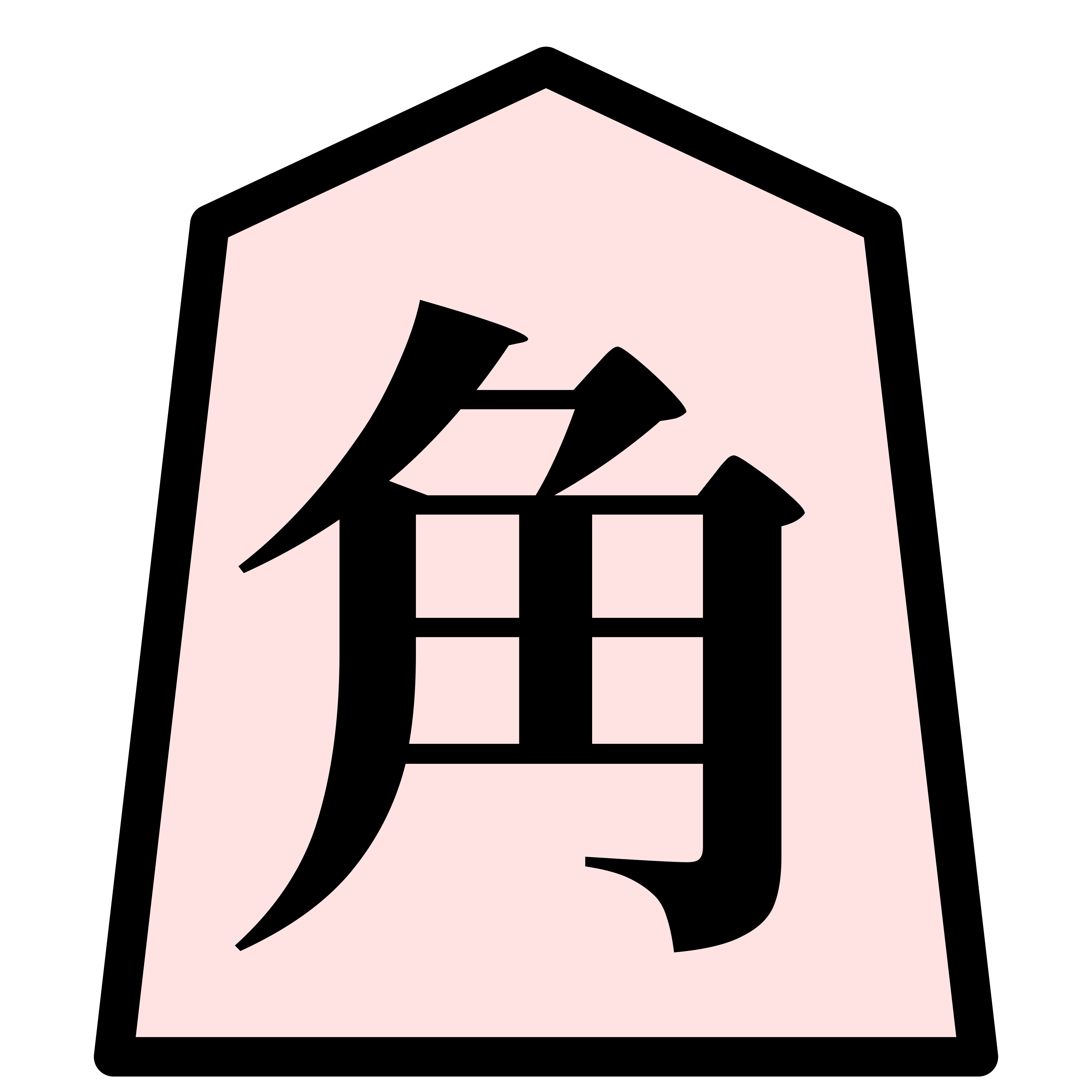
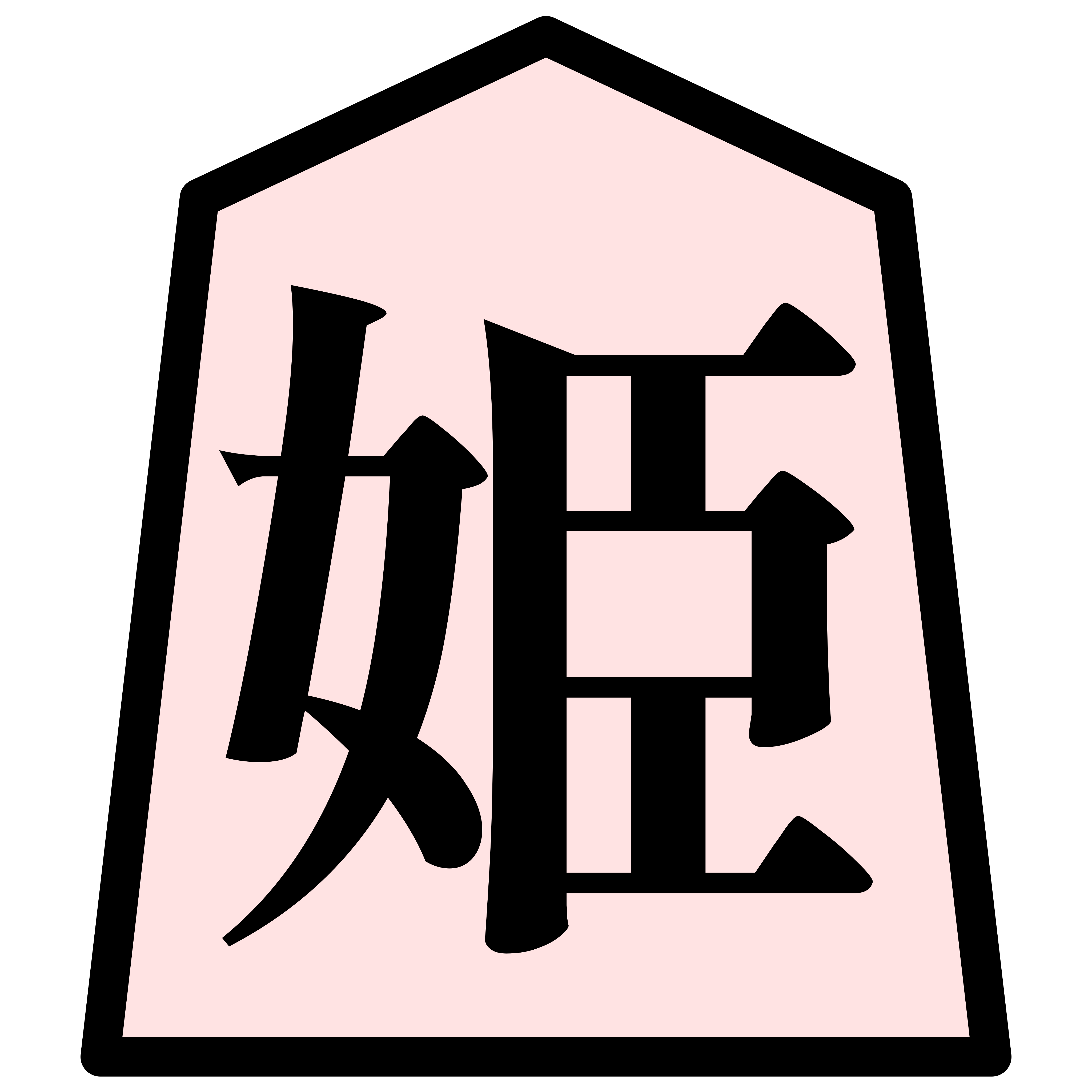
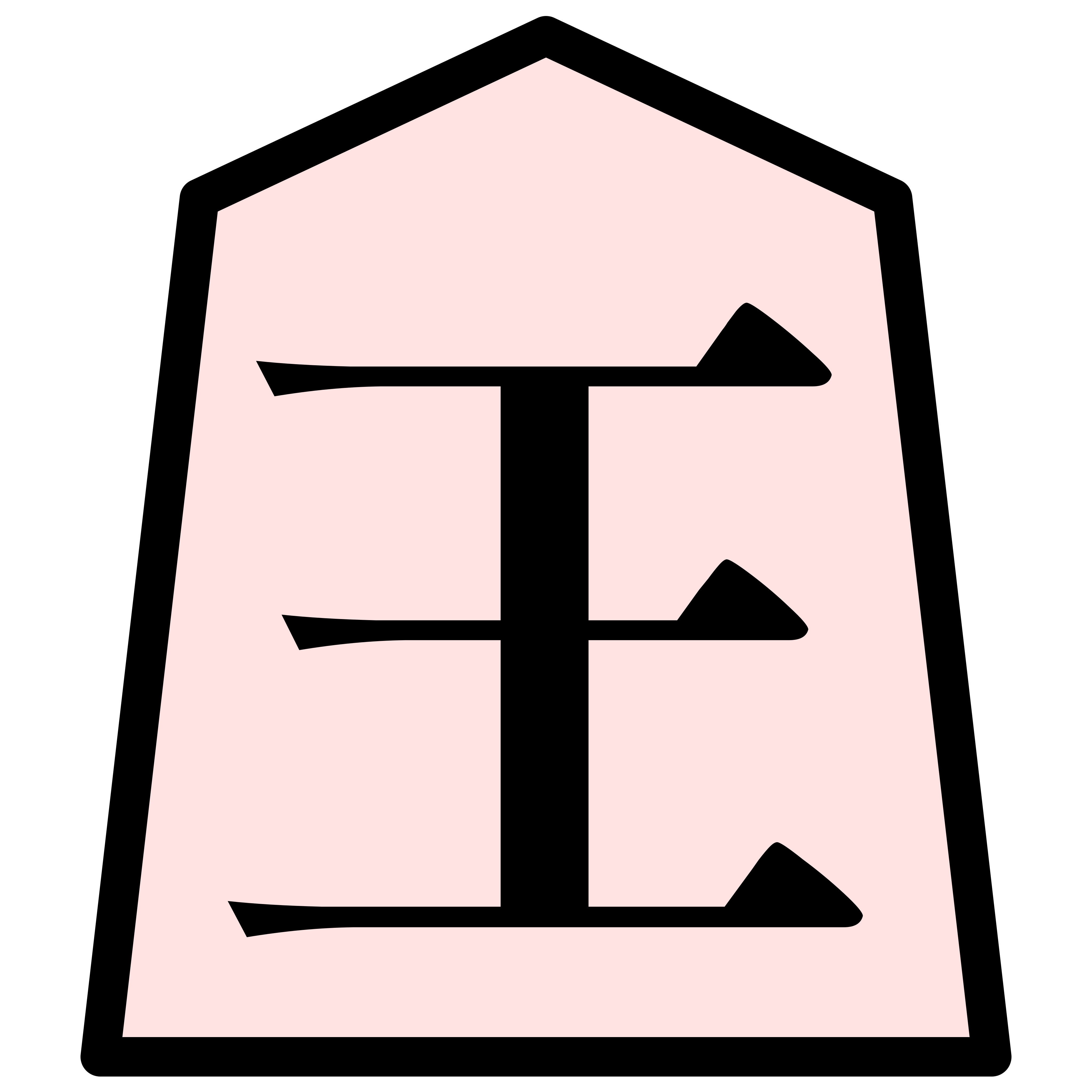
王棋ちゃん ōgi
Starting position 0 / 25
The point is not to flatten these games into one. It is to let them remain themselves — and discover what happens when they share a table.
A place to play, not just to watch
Sanki is free and runs in the browser. There is no sign-up form and no email address to hand over: your key is created in your browser, and it is your identity. It is also yours to keep — back it up, because we cannot recover it for you.
You can play, follow players, watch games, solve problems and compose your own. The site is new, so the player pool is still small — and we would rather say so plainly than pretend otherwise.
If you are here early, you are helping to set its first games, positions and habits.
Why put these games together?
Chess belongs to no company. Neither do xiàngqí or shōgi, the games xiongqi and ōgi descend from. Their rules, ideas and accumulated knowledge were made over centuries by players, then passed on to other players. We think that deserves an open meeting place — one that keeps the rules, records and tools available to everyone.
Your games should remain yours
A game on Sanki is not simply a record in our database. It is a sequence of public events signed by its players, using an open protocol (Nostr). Its rules are named in the game itself, so anyone can replay the moves and verify the result independently.
We operate useful services — including a relay, matchmaking and ratings — but they do not own your games or decide their outcome. Others can run compatible services too.
There are no trackers, no email collection and nothing to sign up for. If Sanki disappeared tomorrow, your identity and your games could outlive it: they are public events, and anyone can keep a copy.
The specifications are open at sashite.dev, and each game’s rules are published on its own site.
What we do not claim
This is launch day, not the finished story.
We do not claim that every cross-game pairing is perfectly balanced. First move already matters in chess; new combinations deserve the same scrutiny. We measure the games, publish what we find, and will evolve rules carefully for games that have not yet been played.
We also distinguish between what can be verified today and what cannot. Rule integrity is public and checkable. Statistical engine detection is not available at launch, and we would rather state that plainly than pretend otherwise.
Sanki started in 2013, and has been built, set aside and rebuilt many times since. Sashité is still a very small publisher — one person, today — but the hope is simple: that games the world developed separately can finally have a table in common.